Transforming Agriculture is one of the first frontier areas for exploration launched by the MIT Climate Project.
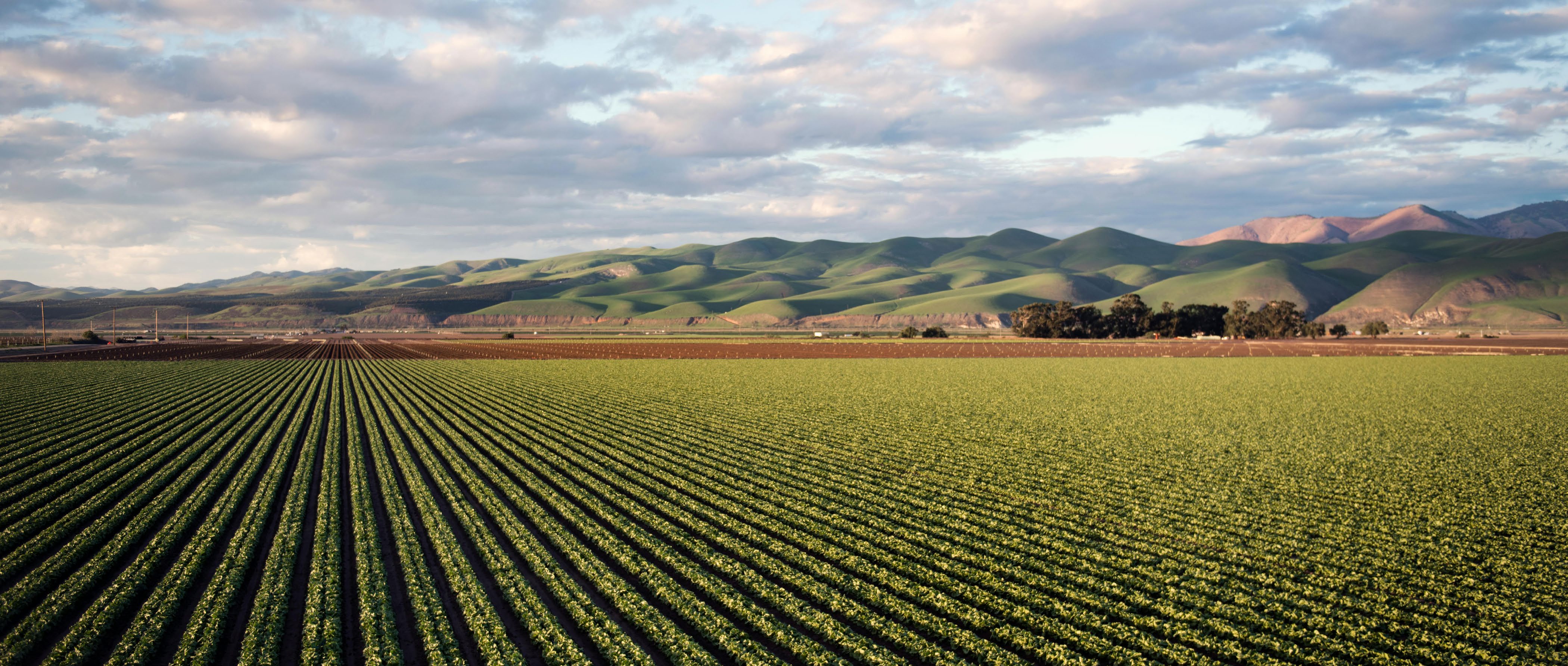
Field near mountain (Image: Tim Mossholder, Unsplash)
Problem and Impact
Agriculture is defined by a paradox of too much and not enough. Too much of what goes into agriculture—nitrogen, carbon, pesticides, energy—leaks into the environment, while not enough remains where it supports crops, soils, and farmers.
Without today’s industrial farming methods, we could not feed billions of people. Yet modern food systems are energy-intensive, emissions-heavy, and locked in a damaging cycle with climate change: agriculture contributes to warming, and warming, in turn, places growing stress on agriculture. Amid these challenges, our food system is reaching its limits as the global population is expected to grow.
Feeding the world while protecting the planet requires a fundamental redesign of agricultural systems. This opportunity exists because of advances in modern biology, bioengineering, sensing, computation, and materials—capabilities that MIT has developed over decades. Tools designed to work in complex living systems for human health now make it possible to do the same for agriculture, beginning with plants and soils and extending to entire ecosystems.
Vision
A starting point, and a distinctive strength of MIT, is the application of the tools of modern biology and bioengineering to understand and guide interactions among microbes, roots, plants, soils, water, and climate. Making sense of these complex systems will deliver insight into how to grow more food with fewer inputs, lower emissions, greater nutrition and yield, and healthier ecosystems.
At the scientific core of this transformation are microbial and plant-based innovations—engineered microbes, enhanced biological fixation, targeted nutrient release, and soil microbiome health. These advances combine with next-generation sensing, AI-driven decision tools, and novel materials that allow farmers to precisely shape the conditions their crops need, when and where they are needed.
The Role for MIT
MIT’s distinctive contribution is its ability to connect such deep biological insight with engineering, data, and systems design. Where agricultural research often tackles isolated challenges—fertilizer efficiency, crop traits, soil health—MIT brings these elements together, linking molecular-scale processes to field performance, regional impacts, and global outcomes.
And we are not starting from scratch. Building on a strong foundation of agricultural research that spans bioengineering, synthetic biology, materials science, AI, sensing, robotics, economics, and systems modeling, MIT brings a uniquely powerful mix of expertise to design and deploy agricultural systems that are efficient, resilient, and responsive to local conditions. By harnessing these capabilities together, MIT will help lead the new era of agriculture—one that aligns food production with climate, energy, and ecosystem goals while supporting farmers and communities worldwide.
Crucially, this redesign cannot be abstract or one-size-fits-all. Agricultural systems are shaped by local climates, soils, crops, cultures, and economies, and solutions must be tested and refined under real-world conditions. Progress will depend on working with farmers, regions, and communities to pilot new approaches, learn what works in practice, and adapt innovations to diverse contexts—from smallholder systems to industrial agriculture.