Book reviews: State ownership and resource governance and corporate climate adaptation
The Climate Project's Scott Odell recently published book reviews of Business of the State: Why State Ownership Matters for Resource Governance by New Singh and Corporate Climate Adaptation: Translating Complex Societal Risks into Business as Usual by Maria-Therese Gustafsson and Lisa Dellmuth.
As climate change accelerates across the globe, government, industry, and civil society discourse and action tend to remain focused on mitigation. While efforts to reduce greenhouse gas emissions are crucial to addressing long-term global warming, its impacts are already being felt now, especially in politically and economically marginalized communities of both the Global North and South.
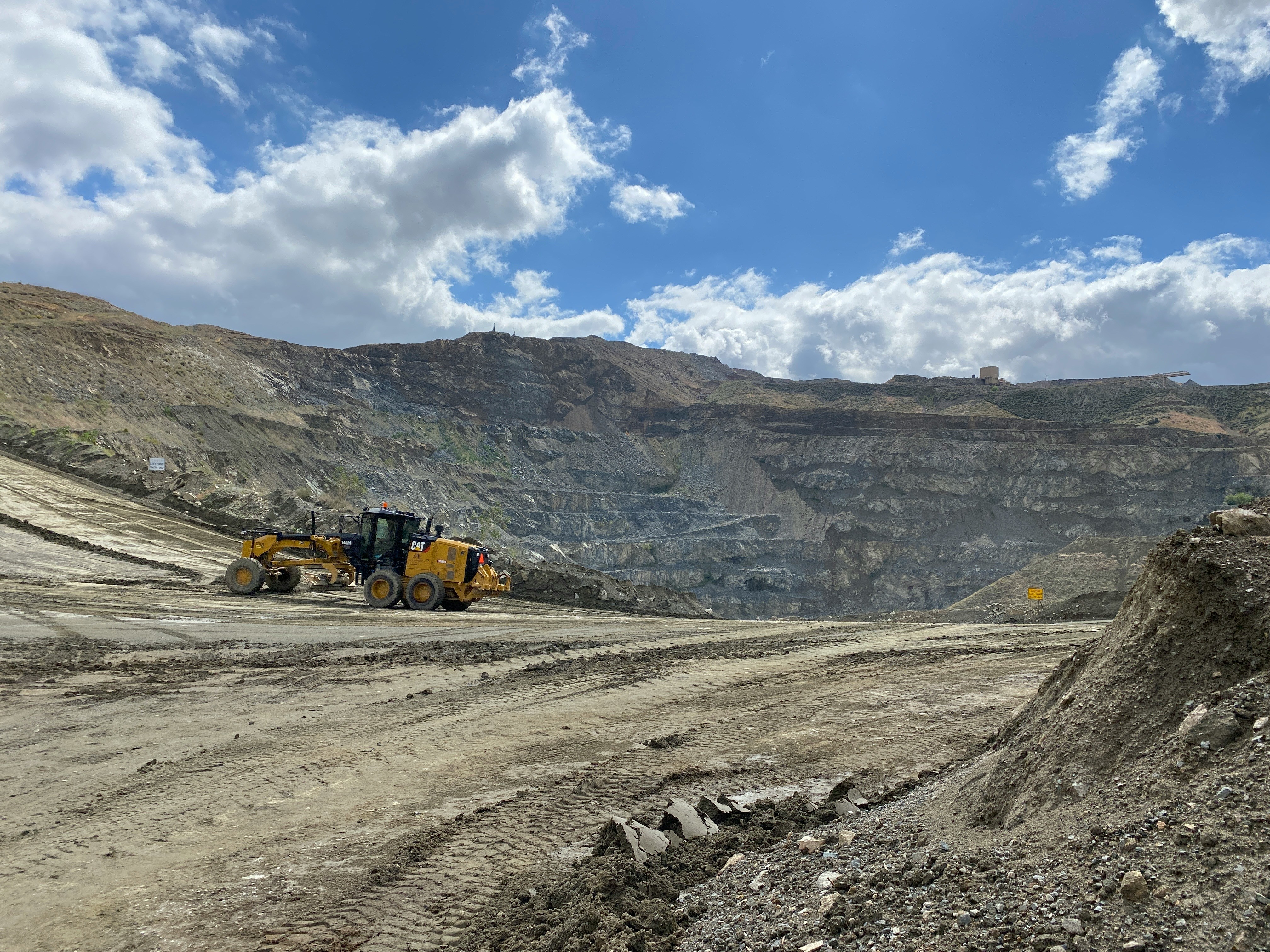
Within this context, Gus- tafsson and Dellmuth have released a timely study of current industry efforts to adapt to climate change. Of special interest for EXIS readers, the book employs detailed analysis of the large-scale mining industry to examine “how companies address the societal risks associated with their business activities in a context of climate change and what motivates them to do so” (p. 2).
Read the full review of Corporate climate adaptation: Translating complex societal risks into business as usual, Book by Maria-Therese Gustafsson and Lisa Dellmuth, Cambridge University Press.
Across the world, rising energy demand and geopolitical tensions have contributed to increased attention to the role of the state in natural resource production. For example, the U.S. government has invested in domestic companies charged with mining rare earths, copper, and lithium. Chile, Bolivia, and Mexico have tested proposals to nationalize lithium production. Moreover, the European Union passed the Critical Raw Materials Act, aiming to ensure that 10% of mining and 40% of processing of its strategic raw materials are produced within the bloc by 2030. These developments are emerging explicitly or implicitly in response to the increasingly prominent role of Chinese state-owned enterprises (SOEs) in global mining and processing supply chains.
In this context, Nem Singh has produced a timely book exploring how and why some states have preserved or expanded SOEs in the natural resource sector, even within stereotypically market-oriented contexts. Specifically, he analyzes "… why some states decide to maintain full control over their SOEs rather than privatize them, and what sort of reforms are implemented to retain [their] development functions …" (p. 18). He approaches these questions theoretically from a historical institutionalist (HI) lens, and methodologically through a comparative case study approach of the National Copper Corporation of Chile (Codelco) and the Brazilian Petroleum Corporation (Petrobras).
Read the full review of Business of the State: Why State Ownership Matters for Resource Governance.